A witchcraft planner brings magical timing and ordinary planning into the same place. That makes it easier to follow through.
The goal is not to decorate every page. The goal is to remember what you are practicing and when you want to return to it.
Monthly Planning
Add moon phases, sabbats, birthdays, appointments, and ritual dates. Leave room for one intention and one review note.
Practice Trackers
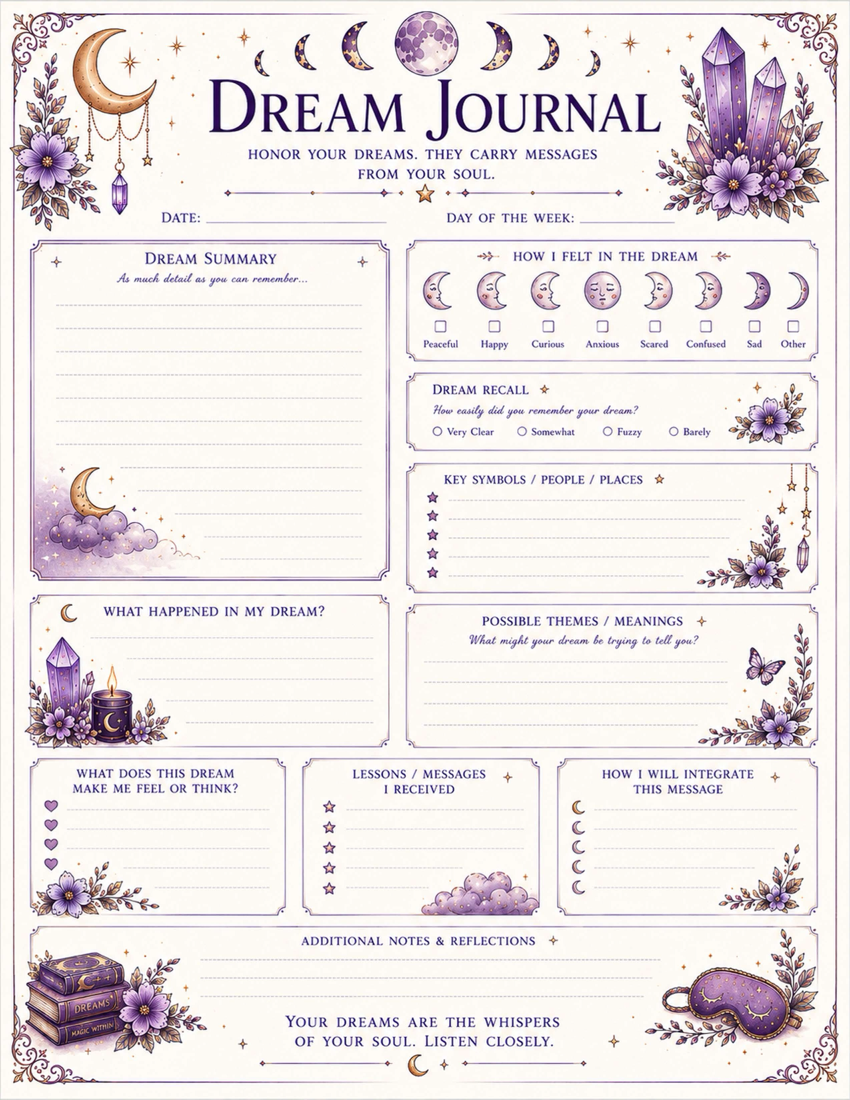
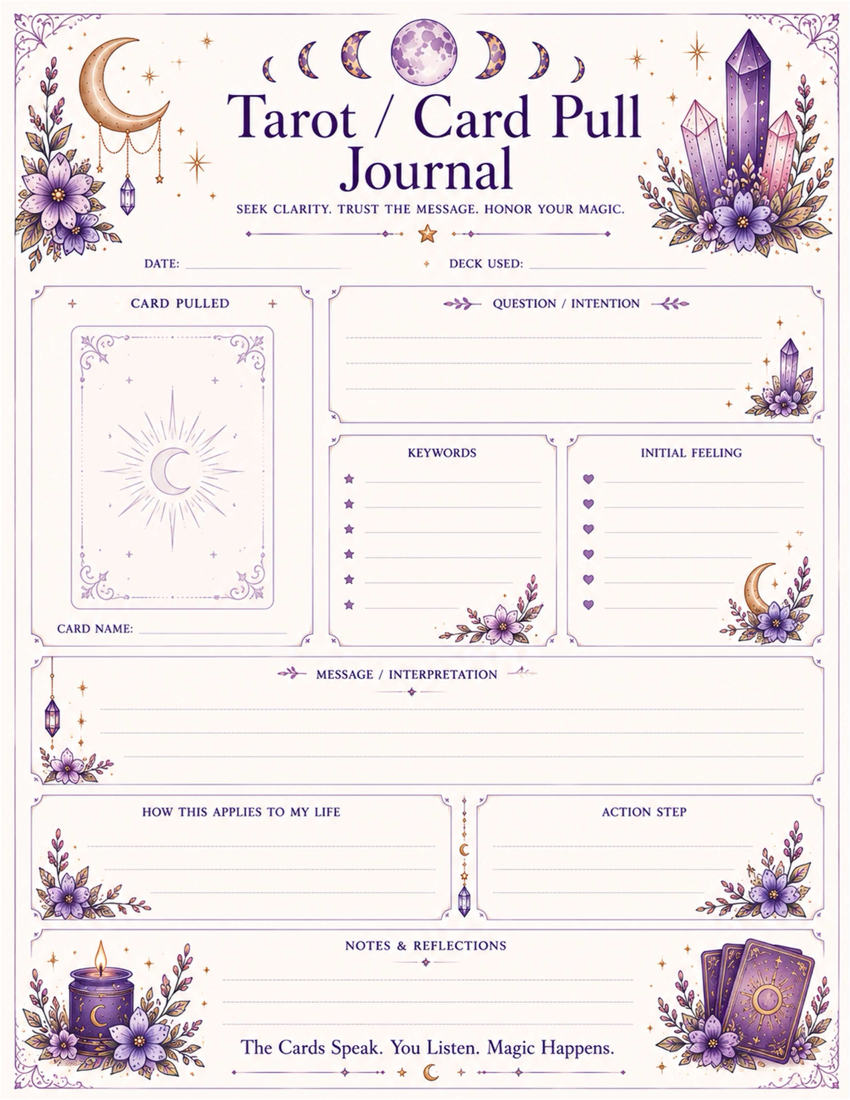
Track tarot pulls, dream notes, meditation, spell results, herb study, or crystal work. Track only what teaches you something.
Printable Pages
Printable inserts are helpful when you want tarot spreads, spell records, cover pages, indexes, and stickers without designing every layout yourself.
Related Resources
A witchcraft planner works best when it tracks repeated practice, not when it tries to hold every possible correspondence at once.
Start With Dates And Cycles
Add moon phases, sabbats, personal anniversaries, seasonal notes, and any recurring rituals you actually observe. A planner becomes useful when it helps you notice timing: what you do during a new moon, what tends to happen around a full moon, and which sabbats you want to prepare for ahead of time.
Add Working Pages
Include spell notes, tarot pulls, herb and crystal tests, dream notes, candle colors, and results pages. Keep each page simple: date, intention, materials, action, result. You can always decorate later, but the recordkeeping is what makes the planner valuable.
Keep A Supplies And Ideas List
Track supplies you already own before making a wish list. This prevents duplicate purchases and helps you build spells from what is available. Link the list to the shop only when you truly need a missing item.
Review Monthly
At the end of each month, mark what you repeated, what felt useful, and what you can release. A planner should reduce mental clutter. If a tracker makes you feel guilty, simplify it.
Related Practice
For more context, explore the Witchcraft Guides, ritual recipes, and Grimoire Starter Checklist. Use those pages to turn this topic into notes, repeatable steps, and personal observations.
Make This Practice Your Own
Create monthly review pages with three questions: What did I repeat? What worked? What needs to be simplified? These questions keep the planner from becoming only decoration.
A Beginner-Friendly Variation
Use symbols sparingly. A moon sticker, candle color dot, or herb abbreviation is useful when it helps you scan the page. If symbols make the planner harder to read, move them to a reference key.
What To Record
Add a “done in real life” checkbox beside spell plans. This reminds you that spiritual intention and ordinary action belong together.
For a fuller practice record, note the date, moon phase, materials, mood, action taken, and any result you can observe later. This keeps What to Put in a Witchcraft Planner connected to lived experience instead of leaving it as a one-time idea.
How To Know It Is Working
With What to Put in a Witchcraft Planner, look for ordinary evidence before looking for dramatic signs. A useful practice should make your next step clearer, help you notice a pattern, or change how you behave in a small but visible way. If nothing in daily life changes, the ritual may need a clearer purpose or a simpler action attached to it.
Give the work a time frame. For a quick spell, review it after a day or a week. For a habit, planner page, protection practice, or relationship-focused ritual, review it after one moon cycle. Write what happened, what did not happen, and what you would change. That review is part of the magic because it turns vague hope into learning.
Common Mistakes To Avoid
Do not add more tools just because the result feels uncertain. More herbs, stones, cards, candles, or pages can make the practice harder to understand. Start with the smallest version that still feels meaningful, then adjust one thing at a time. Also avoid treating correspondences as rules. They are language, not law.
If the working involves another person, keep consent and boundaries in mind. Focus on your clarity, courage, communication, healing, protection, or choices. If the working involves safety, health, money, housing, or legal concerns, pair spiritual practice with qualified real-world help and practical planning.
A Simple Closing Step
End by naming one mundane action. Clean the space, send the message, make the appointment, drink water, update the budget, prepare the notebook, or rest. Closing with action keeps the practice grounded and gives you something specific to evaluate later.
Quick Reference
Use this topic as a reference page and a practice page. First, read for meaning. Second, choose one small action. Third, record what happened. That three-part approach keeps the information useful whether you are planning a spell, updating a grimoire, preparing a ritual, or comparing correspondences.
If you return to this topic later, look for what changed in your own notes. Personal experience, safety, consent, and practical follow-through should shape how you use any magical correspondence or ritual structure.