Learn The Practice
How To Read A Tarot Spread
A tarot spread works best when the question is clear and each card position has a job. The tool can give you a starting map, but your journal notes make the reading useful.
- Use one card for a daily theme or direct prompt.
- Use three cards for past, present, future or situation, challenge, advice.
- Use five cards when you need context, obstacle, support, action, and outcome.
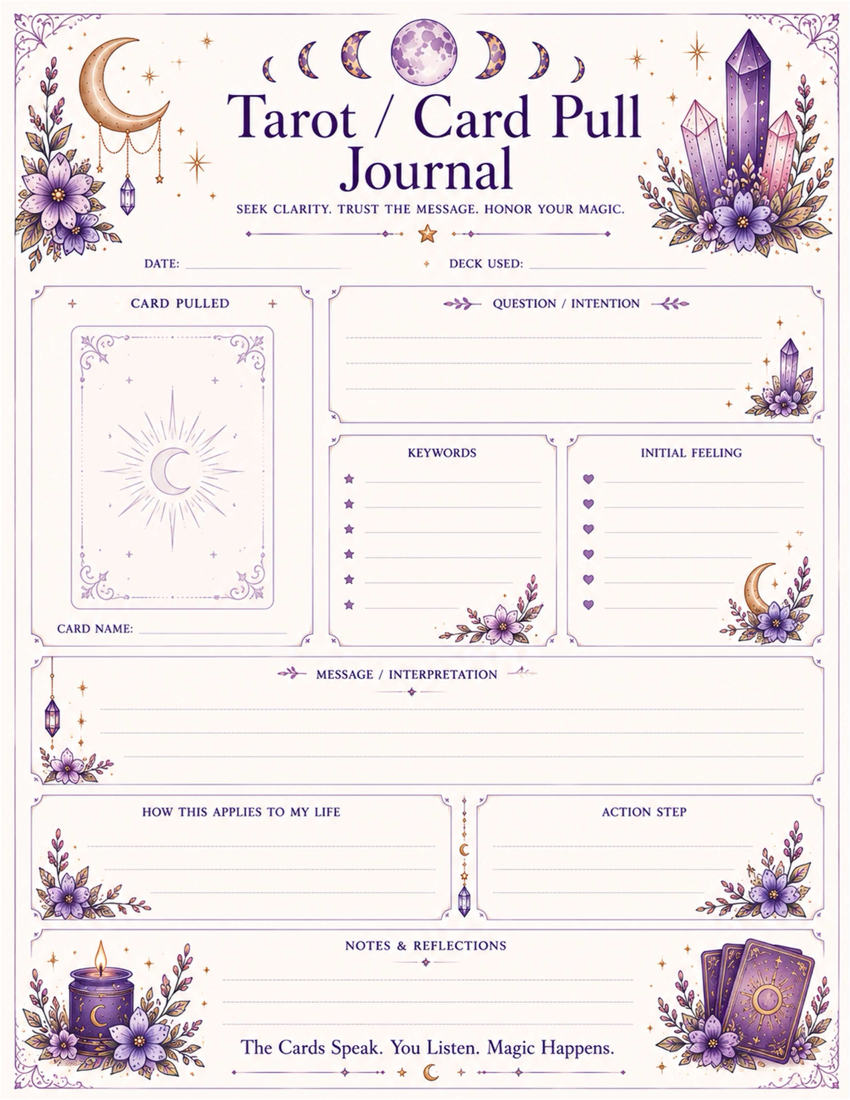
- Write one practical next step after the interpretation.
Example Reading Flow
Ask one open question, choose the three-card spread, read the imagery before the guide text, then write a final sentence that turns the reading into a next step.
Practical Uses
- Daily journaling when you want one clear theme.
- Decision reflection when you need to see options and tradeoffs.
- Spell planning when you want to understand the situation before choosing materials.
Practice Notes
Read The Spread As A Whole
After naming each card, look at the direction of the images, repeated suits, repeated numbers, and emotional tone across the spread. The relationship between cards often says more than one isolated definition.
Avoid Re-Reading The Same Question
If a reading feels unclear, write down what is confusing and return later instead of immediately drawing more cards. Too many follow-up pulls can blur the original message and turn reflection into anxiety.
Make One Practical Sentence
End each reading with one sentence that begins with today I can. That habit moves the spread from interesting symbolism into something you can actually test in ordinary life.
Questions To Try
- What pattern is asking for my attention?
- What support is available that I am overlooking?
- What action would make this reading useful today?