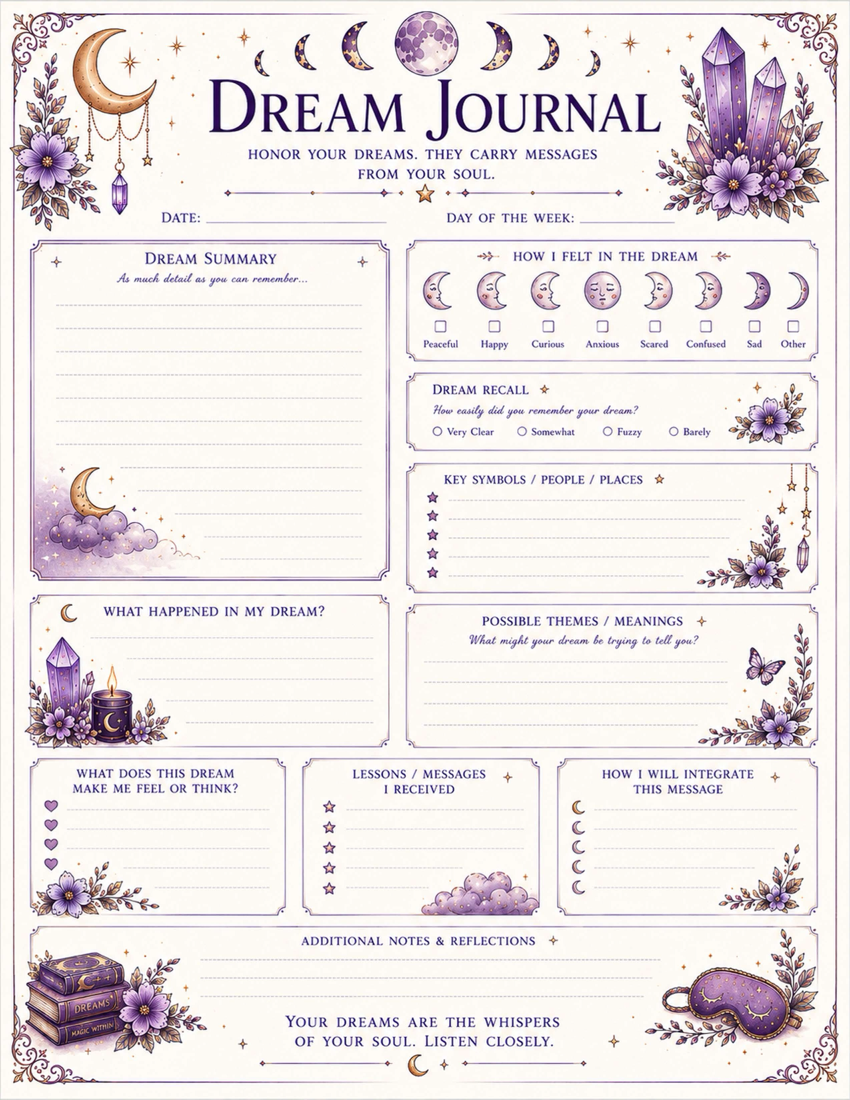
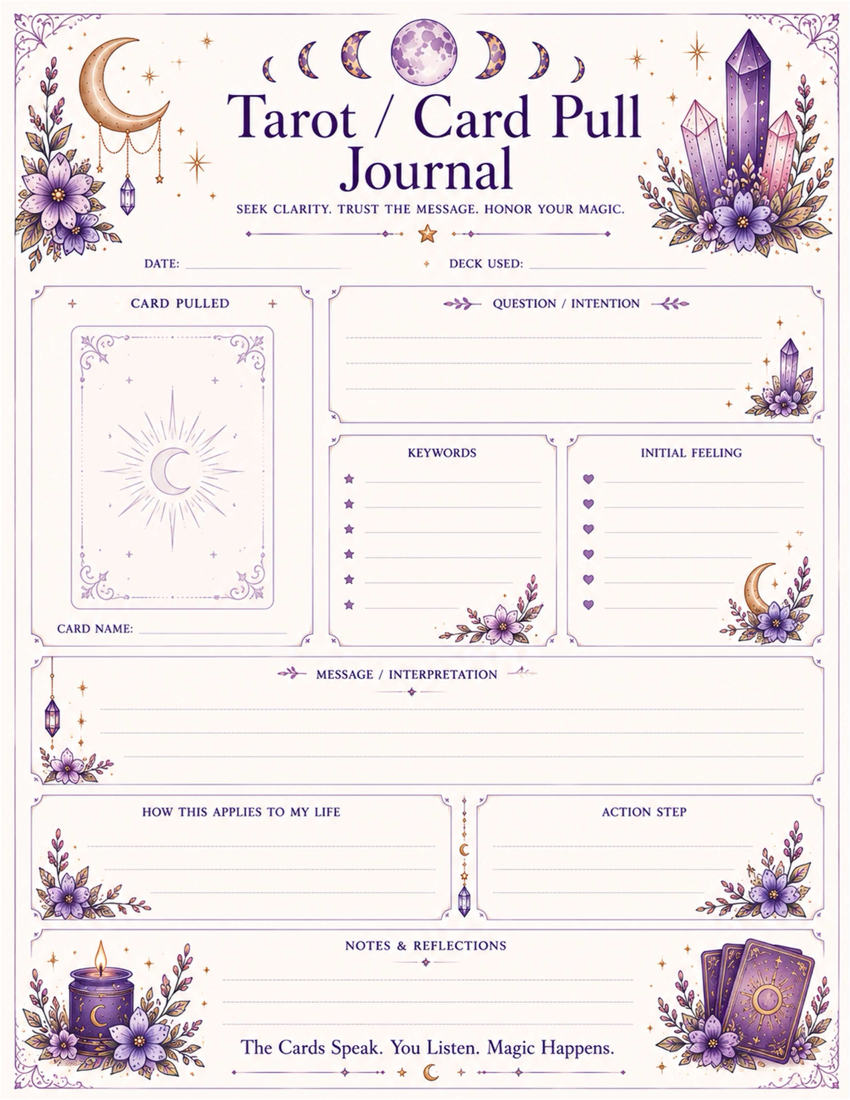
Core Pages
- Index or table of contents
- Moon phase notes
- Spell record page
- Tarot or divination log
- Herb and crystal reference notes
Starter resource
Build a grimoire that is useful in practice: records, references, recipes, and notes you can actually return to.
A grimoire does not need to be perfect, expensive, or fully decorated before it becomes useful. The best beginner grimoire is a working notebook: a place to record what you tried, what you learned, what you want to repeat, and what you would change next time.
Choose one binder, notebook, or printable system. Create a simple index at the front and leave blank space in every section. Your practice will change, and the grimoire should be able to change with it.
Do not try to build every section in one weekend. Choose one active section and one reference section. If you are learning moon magic, keep a moon log and one spell record page. If you are learning herbs, keep a small herb profile section and add only the plants you actually use.
After each ritual, recipe, tarot pull, or spell, add one note. That note can be a full page or a single sentence. The habit matters more than the page count.
Before adding a new page, ask whether you will use it in the next month. Does it help you make a choice, remember a result, practice safely, or find information quickly? If not, save the idea for later instead of filling the grimoire with pages that only make the system heavier.
The best grimoire is not the largest one. It is the one you return to when you need clarity, structure, and a record of your own experience.
First month plan
Use this four-week structure if you want a practical starting rhythm without turning the grimoire into homework.
Create an index, a moon phase page, and one spell record template. Keep the design simple enough that you can copy it later.
Add three herb notes and three crystal notes based on materials you own or want to understand before using in spellwork.
Record one tarot pull, one simple ritual, or one recipe experiment. Include what you did afterward in ordinary life.
Review what you used. Keep the pages that helped you practice and simplify anything that felt decorative but hard to return to.
Next steps
Use the checklist as the outline, then build the actual grimoire sections from guides, tools, and repeatable records.
Plan spell records, tarot logs, herb profiles, crystal notes, moon trackers, and ritual recipe pages that you can reuse.
If you are still deciding what belongs in your grimoire, start with one daily practice, one moon page, and one spell record.
Grimoire Questions
A beginner grimoire should include an index, spell records, moon notes, divination logs, correspondences, recipes, and result reviews.
Start with one notebook or binder, create a few useful sections, and add notes after actual rituals, readings, recipes, and spellwork.
The terms overlap. Many witches use grimoire for reference and practice records, while book of shadows can include more personal reflection.
Yes. A beginner grimoire is one of the best ways to learn because it turns practice into a record you can review.
Curated supplies