A tarot journal helps you stop losing readings as soon as the cards are put away. It turns card pulls into a record you can learn from.
You do not need to write pages for every reading. A clear structure and one practical takeaway are enough.
Daily Pull Notes
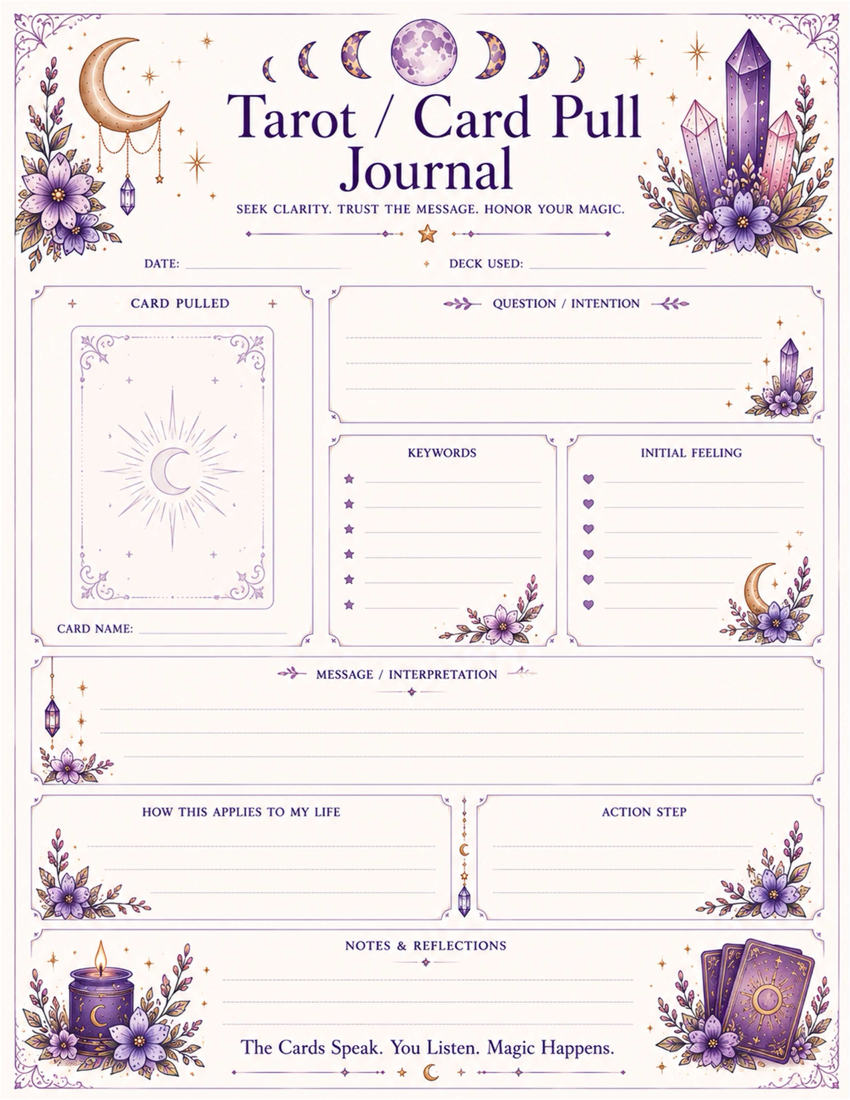
Write the card, the question, three keywords, and one sentence about how the card might show up during the day.
Three-Card Spreads
Use past, present, future; situation, challenge, advice; or body, mind, spirit. Keep the positions consistent while you learn.
Track Patterns
Review repeated cards, suits, numbers, and themes. Patterns are where a tarot journal becomes more useful than memory.
Related Resources
A tarot journal turns one reading into a pattern you can learn from over time.
Record More Than The Card Name
Write the question, spread, date, deck, first reaction, and one practical takeaway. The card meaning matters, but your first impression and the eventual outcome are what teach you how you read.
Use Small Repeatable Spreads
Try one-card check-ins, three-card situation/action/outcome spreads, or a weekly theme card. Repeating the same structure makes it easier to compare readings. If you need a starting point, pair this with the tarot reading tool.
Track Symbols And Feelings
Notice repeated colors, numbers, suits, body language, weather, animals, or objects in the cards. Also note whether the reading felt clarifying, challenging, comforting, or confusing. These details often reveal more than memorized keywords.
Review Before Pulling Again
Before asking the same question repeatedly, review the last answer and what action you took. Tarot journaling works best when it moves you from interpretation into choice.
Related Practice
For more context, explore the Witchcraft Guides, ritual recipes, and Grimoire Starter Checklist. Use those pages to turn this topic into notes, repeatable steps, and personal observations.
Make This Practice Your Own
Add a “later meaning” line to each reading. Come back after a day, week, or month and write what the card seemed to mean in hindsight. This is one of the fastest ways to learn your deck.
A Beginner-Friendly Variation
Track reversals only if they help you. Some readers use them, some do not. The journal should record the system you are actually using, not the system you think looks more advanced.
What To Record
Create a personal keyword list. When a card repeats, write the phrase it seems to use with you. Your lived meanings will become more precise than a generic guidebook list.
For a fuller practice record, note the date, moon phase, materials, mood, action taken, and any result you can observe later. This keeps Tarot Journal Ideas connected to lived experience instead of leaving it as a one-time idea.
How To Know It Is Working
With Tarot Journal Ideas, look for ordinary evidence before looking for dramatic signs. A useful practice should make your next step clearer, help you notice a pattern, or change how you behave in a small but visible way. If nothing in daily life changes, the ritual may need a clearer purpose or a simpler action attached to it.
Give the work a time frame. For a quick spell, review it after a day or a week. For a habit, planner page, protection practice, or relationship-focused ritual, review it after one moon cycle. Write what happened, what did not happen, and what you would change. That review is part of the magic because it turns vague hope into learning.
Common Mistakes To Avoid
Do not add more tools just because the result feels uncertain. More herbs, stones, cards, candles, or pages can make the practice harder to understand. Start with the smallest version that still feels meaningful, then adjust one thing at a time. Also avoid treating correspondences as rules. They are language, not law.
If the working involves another person, keep consent and boundaries in mind. Focus on your clarity, courage, communication, healing, protection, or choices. If the working involves safety, health, money, housing, or legal concerns, pair spiritual practice with qualified real-world help and practical planning.
A Simple Closing Step
End by naming one mundane action. Clean the space, send the message, make the appointment, drink water, update the budget, prepare the notebook, or rest. Closing with action keeps the practice grounded and gives you something specific to evaluate later.
Quick Reference
Use this topic as a reference page and a practice page. First, read for meaning. Second, choose one small action. Third, record what happened. That three-part approach keeps the information useful whether you are planning a spell, updating a grimoire, preparing a ritual, or comparing correspondences.
If you return to this topic later, look for what changed in your own notes. Personal experience, safety, consent, and practical follow-through should shape how you use any magical correspondence or ritual structure.