A small witch altar works best when every item has a job. It does not need to hold every crystal, herb, charm, candle, or book you own. A strong altar creates a clear place to pause, focus, and return to your practice without feeling like you have to clean before you can begin.
Choose the purpose first
Before choosing objects, decide what the altar is for. Is it for daily grounding, moon work, tarot pulls, ancestor remembrance, spellwork, or seasonal celebration? A moon altar might include a bowl of water, a candle, and a journal. A tarot altar might include a cloth, deck, and a small stone for focus.
Use the four-part altar rule
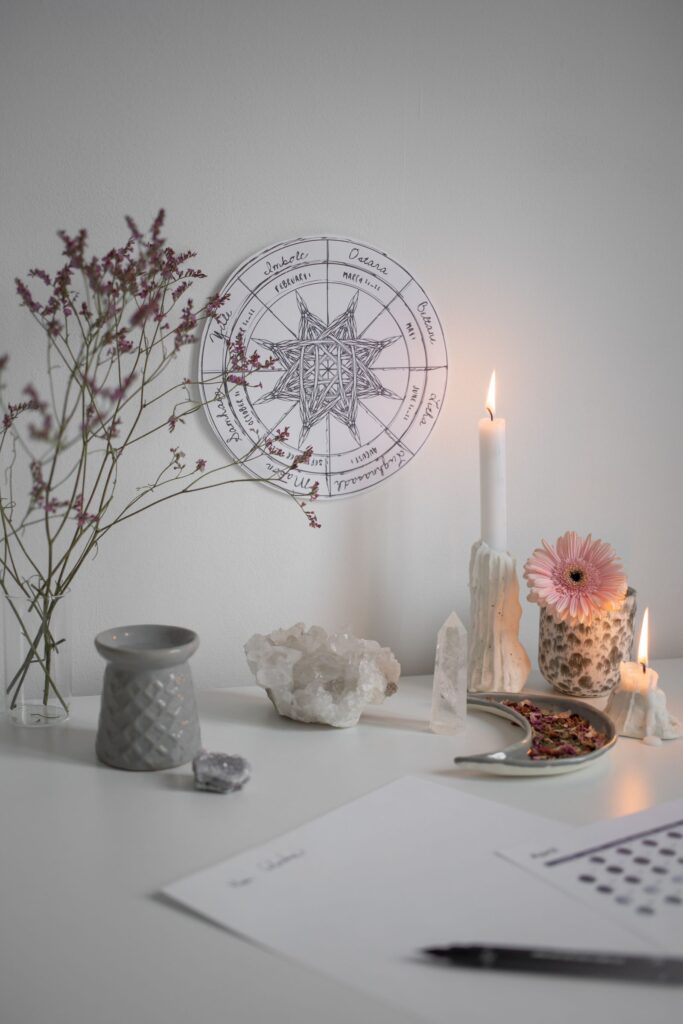
For a tiny altar, try four categories: a surface, a light, a symbol, and a record. The surface can be a tray, cloth, shelf, or dish. The light can be a candle or battery light. The symbol can be a stone, charm, card, flower, or seasonal object. The record can be a notebook, printable page, or single index card.
Rotate instead of collecting
If your altar starts feeling crowded, rotate pieces by intention. Keep protective items out during boundary work, swap in love or healing correspondences when that is the focus, and use the crystal meanings guide or herb guide to choose only what supports the current work.
Make it easy to reset
A useful altar can be cleaned in five minutes. Keep matches, herbs, ash, wax, and paper contained. Avoid leaving flammable materials near candle flames, and use a fire-safe dish whenever you burn anything. If you want more altar pieces, browse the shop with one purpose in mind so the setup stays intentional.
The best altar is not the biggest one. It is the one you actually use.
Small altar checklist
- A defined surface: tray, shelf, cloth, plate, or box lid.
- One focus object: candle, card, stone, charm, bowl, or seasonal item.
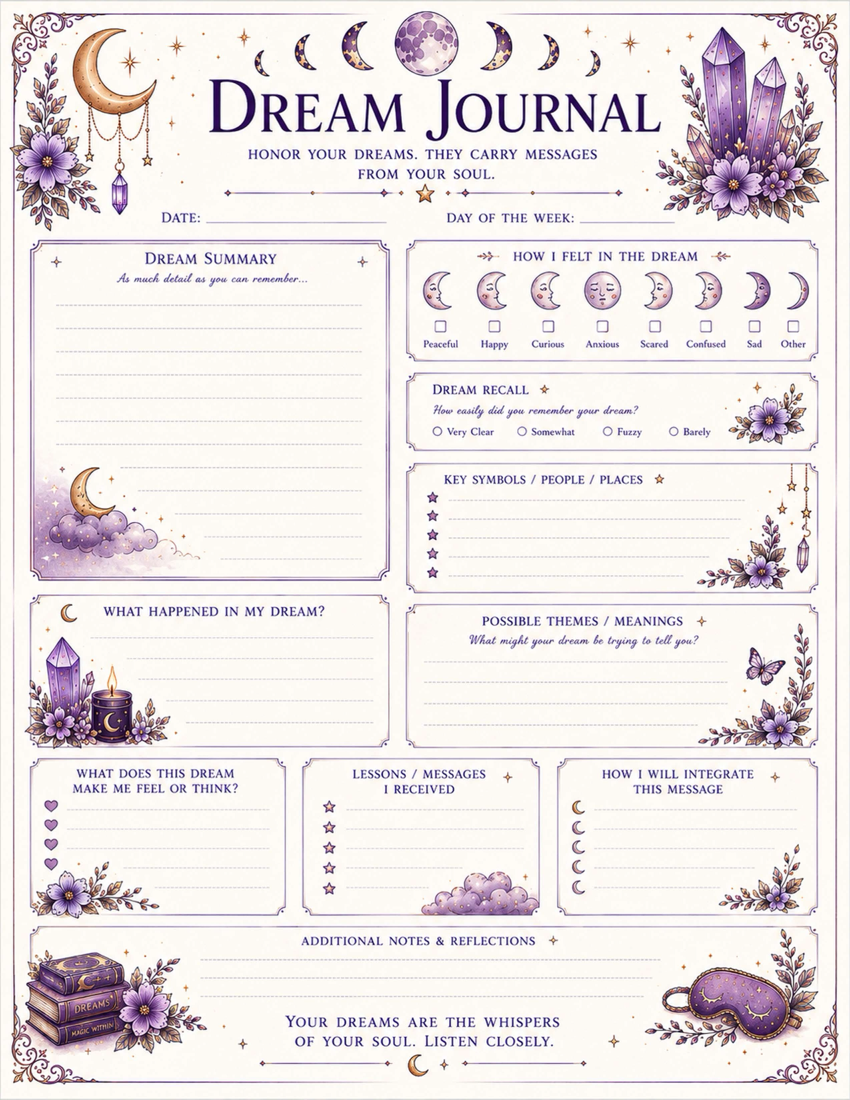
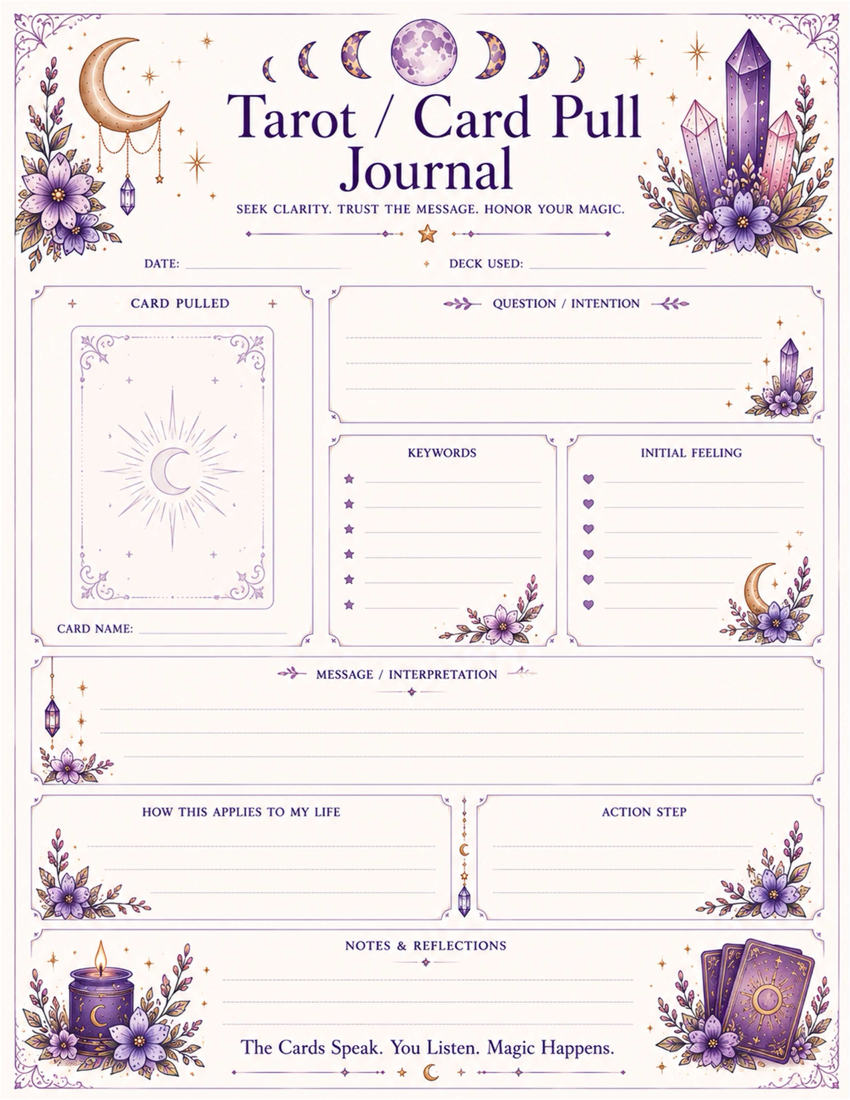
- One record: notebook, printable grimoire page, or folded paper.
- One safety rule: no loose herbs, paper, or fabric near flame.
When to refresh your altar
Refresh the altar when the intention changes, when the space feels visually noisy, or when you stop noticing the objects. A cluttered altar often means the practice has no current focus. Remove everything, wipe the surface, and rebuild with only what serves the next spell, season, or daily habit.
If you use your altar for spellwork, pair it with the spell library so each object supports a clear purpose instead of becoming decoration without direction.
A small altar works when every object has a job and the space can be reset quickly.
Use Four Categories
Choose a surface, a light, a symbol, and a record. The surface might be a tray or shelf. The light might be a candle or battery light. The symbol might be a stone, card, or charm. The record might be a notebook or single index card.
Rotate Seasonally
Instead of keeping everything out forever, rotate one or two items for the moon phase or sabbat. A tiny altar can still feel alive if it changes with the work. Use the Sabbats guide for seasonal cues.
Keep Supplies Nearby But Not On The Altar
Store extra herbs, cards, jars, and candles in a box or drawer. The altar is the working surface, not the entire supply closet. This makes rituals easier to begin and easier to clean up.
Make Reset Part Of The Practice
At the end of each week, remove dust, old notes, dead flowers, and supplies that no longer match your intention. A reset can be a ritual by itself.
Related Practice
For more context, explore the Witchcraft Guides, ritual recipes, and Grimoire Starter Checklist. Use those pages to turn this topic into notes, repeatable steps, and personal observations.
Make This Practice Your Own
Give every object a reason to stay. If you cannot name what an item supports, store it elsewhere. A clear altar is easier to use and easier to respect.
A Beginner-Friendly Variation
Use containers. A small dish for stones, a cup for pens, and one tray for the whole altar can make the space feel intentional without spreading across the room.
What To Record
Photograph seasonal setups before changing them. The photos become a visual grimoire and make it easier to see how your practice evolves.
For a fuller practice record, note the date, moon phase, materials, mood, action taken, and any result you can observe later. This keeps How to Build a Small Witch Altar Without Clutter connected to lived experience instead of leaving it as a one-time idea.
How To Know It Is Working
With How to Build a Small Witch Altar Without Clutter, look for ordinary evidence before looking for dramatic signs. A useful practice should make your next step clearer, help you notice a pattern, or change how you behave in a small but visible way. If nothing in daily life changes, the ritual may need a clearer purpose or a simpler action attached to it.
Give the work a time frame. For a quick spell, review it after a day or a week. For a habit, planner page, protection practice, or relationship-focused ritual, review it after one moon cycle. Write what happened, what did not happen, and what you would change. That review is part of the magic because it turns vague hope into learning.
Common Mistakes To Avoid
Do not add more tools just because the result feels uncertain. More herbs, stones, cards, candles, or pages can make the practice harder to understand. Start with the smallest version that still feels meaningful, then adjust one thing at a time. Also avoid treating correspondences as rules. They are language, not law.
If the working involves another person, keep consent and boundaries in mind. Focus on your clarity, courage, communication, healing, protection, or choices. If the working involves safety, health, money, housing, or legal concerns, pair spiritual practice with qualified real-world help and practical planning.
A Simple Closing Step
End by naming one mundane action. Clean the space, send the message, make the appointment, drink water, update the budget, prepare the notebook, or rest. Closing with action keeps the practice grounded and gives you something specific to evaluate later.